
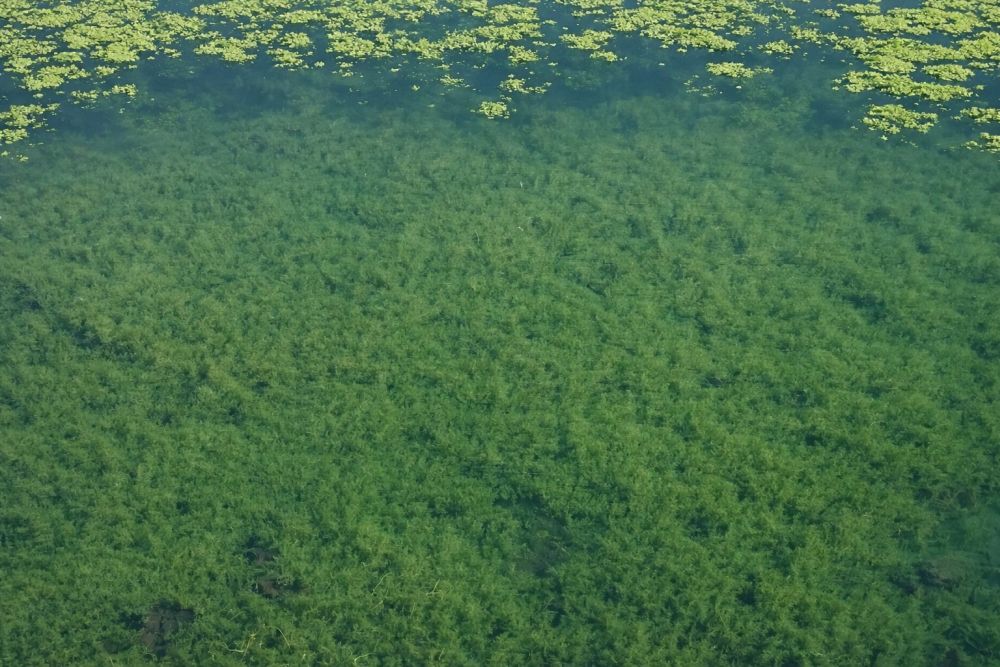
Pond water turns green when algae multiply in high numbers. Algae are naturally present in any pond, but growth accelerates when sunlight, warm temperatures, and excess nutrients combine.
Nitrogen and phosphorus from fish waste, uneaten food, decaying leaves, soil runoff, or fertilizers create ideal conditions for rapid reproduction.
Green water usually signals an imbalance in the pond system. Poor circulation, limited filtration, and high organic load allow nutrients to accumulate. In some cases, blooms may also involve cyanobacteria, which can pose risks to fish, pets, and people.
Understanding the cause is essential before applying any treatment. Effective solutions focus on reducing nutrient levels, improving filtration and circulation, and stabilizing the biological balance of the pond.
What Are the Main Reasons for Green Pond Water?
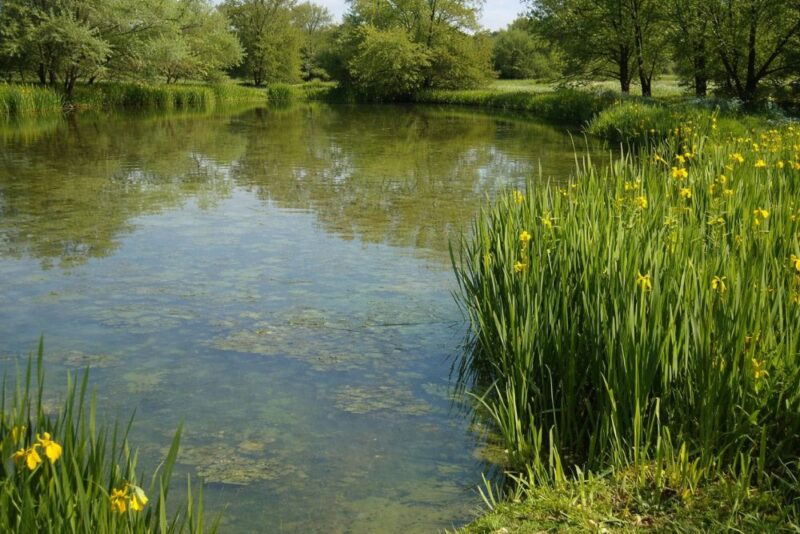
Algae are always present in natural and artificial ponds. Under stable conditions, they remain suspended in low numbers, and the water stays clear.
When environmental factors shift in their favor, reproduction accelerates and water clarity declines.
At its core, the issue is a biological imbalance. A pond is a closed or semi-closed aquatic system.
Nutrients enter, organisms consume them, waste accumulates, and sunlight drives photosynthesis. When nutrient input exceeds what plants, bacteria, and filtration can process, algae fill the gap.
Nutrient Overload As The Primary Driver
Nitrogen and phosphorus are the main growth fuels for algae. Even small increases can trigger rapid expansion.
Common nutrient sources include:
- Fish waste and excess feed
- Decaying leaves, grass clippings, and organic debris
- Runoff carrying soil, fertilizers, or animal waste
- Sediment disturbance at the bottom of the pond
Phosphorus plays a particularly strong role in freshwater systems. When it accumulates, algae respond quickly.
In warm weather, cell division can occur within hours, which explains how water can shift from clear to green in a short period.
Sunlight And Temperature Effects
Algae depend on light for photosynthesis. Longer daylight hours and direct sun exposure increase energy availability. Shallow ponds warm faster, and higher water temperatures accelerate metabolic activity.
Warm, nutrient-rich, sunlit water creates ideal growth conditions. Spring and summer blooms are therefore common, especially after seasonal cleaning disturbs settled nutrients.
Circulation And Oxygen Imbalance
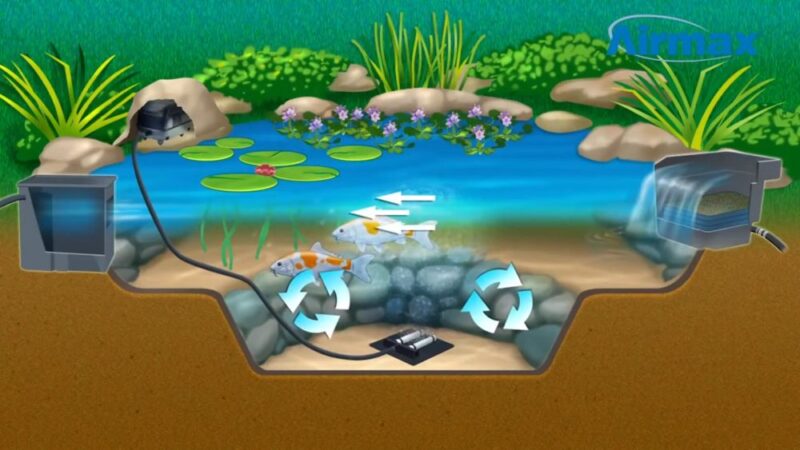
Water movement influences how nutrients and oxygen are distributed through the pond. Poor circulation allows stagnation zones to develop. In those areas, organic matter decomposes and releases additional nutrients into the water column.
Limited aeration can also shift microbial balance. Beneficial bacteria require oxygen to break down waste efficiently. When oxygen drops, decomposition slows and nutrients remain available for algae growth.
Biological Competition And Ecosystem Balance
Healthy aquatic plants compete with algae for nutrients. In ponds with limited plant coverage, algae face less competition and expand more aggressively.
An established biofilter also plays a role. Nitrifying bacteria convert ammonia from fish waste into less harmful compounds. When filtration capacity is undersized or immature, nutrient spikes become more likely.
Green water is rarely the result of a single factor. It usually develops from combined pressures: nutrient input, high light exposure, warm temperatures, and insufficient biological processing.
Identifying which of these pressures dominates in a specific pond allows for targeted correction rather than short-term surface treatments.
Identifying The Type Of Algae And Assessing Risk
Green water does not always mean the same thing. Before choosing a solution, it is important to identify what type of growth is present and whether any health risk exists.
Treatment depends on correct diagnosis.
Free Floating Algae And Classic Green Water
Most green ponds contain suspended microscopic algae. Water appears uniformly green and cloudy, yet surface texture remains normal. There is no thick film, no large clumps, and no odor beyond a typical pond smell.
In this case, the issue is primarily aesthetic and ecological. Oxygen levels may still remain adequate during daylight, though heavy blooms can create nighttime oxygen drops when algae respire.
Free-floating algae respond well to improved filtration, UV clarification, and nutrient reduction.
String Algae And Surface Growth
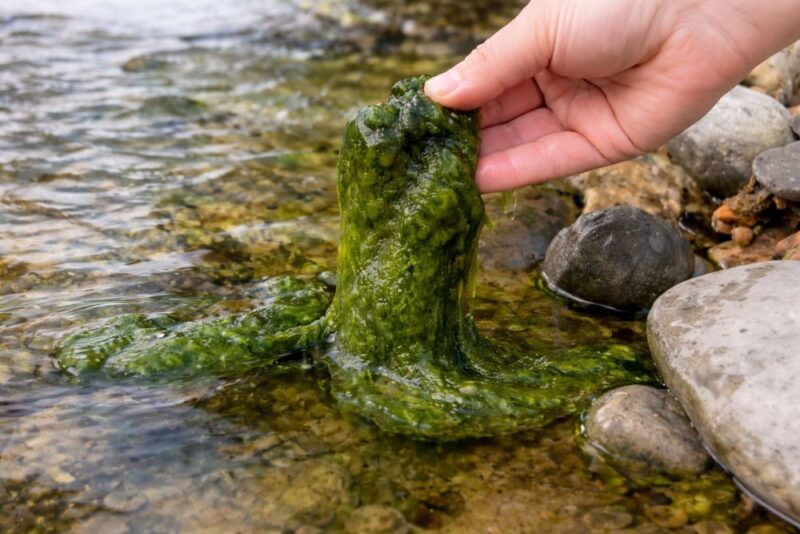
String algae, sometimes called filamentous algae, attach to rocks, walls, and shallow surfaces. They form long strands or mats rather than turning the entire water column green.
While less likely to cloud the water completely, string algae still indicate excess nutrients and strong sunlight. Removal often requires manual extraction combined with environmental correction.
Cyanobacteria And Potential Health Risk
Cyanobacteria, often described as blue green algae, differ biologically from true algae. Some species can produce toxins that affect fish, pets, livestock, and humans.
Warning signs may include:
- Thick surface scum resembling spilled paint
- Clumps that gather along shorelines
- Strong earthy or musty odor
- Sudden fish distress
Risk increases in hot, stagnant, nutrient-rich conditions. If cyanobacteria is suspected, direct contact with the water should be avoided until confirmed safe.
Laboratory testing provides certainty when health concerns arise.
Evaluating Bloom Severity
Severity depends on concentration, duration, and oxygen impact.
Dense blooms can block light penetration, reduce submerged plant health, and cause oxygen depletion when large amounts of algae die simultaneously.
Simple indicators include:
- Visibility depth is measured with a stick or pole
- Fish behavior near the surface, especially at dawn
- Accumulation of sludge at the bottom
Effective Methods For Clearing Green Pond Water

Clearing green pond water requires coordinated adjustments. Algae already suspended in the water must be reduced, and the environmental conditions supporting growth must be corrected at the same time.
Reduce Excess Nutrients
Algae depend on nitrogen and phosphorus. When organic debris accumulates or runoff enters the pond, nutrient levels rise, and blooms intensify.
Immediate corrective steps include removing leaves and plant debris, vacuuming settled sludge, reducing fish feeding temporarily, and limiting fertilizer or soil runoff. Lower nutrient availability slows further reproduction and stabilizes the system.
Optimize Filtration Performance
Mechanical filtration removes suspended particles once algae cells weaken or clump together. Fine filter media increases capture efficiency but must be cleaned consistently to maintain water flow.
Biological filtration supports beneficial bacteria that process fish waste and dissolved nutrients. Stable bacterial colonies reduce ammonia and limit nutrient spikes that trigger blooms. Filtration capacity should match total pond volume and stocking density.
Apply UV Clarification For Suspended Algae
UV clarification targets free-floating algae directly. As water passes through the chamber, ultraviolet light disrupts algae cells, preventing reproduction and causing aggregation. Proper sizing, correct flow rate, clean internal components, and timely bulb replacement determine performance.
UV treatment improves clarity, while nutrient control prevents recurrence.
Improve Circulation And Eliminate Dead Zones
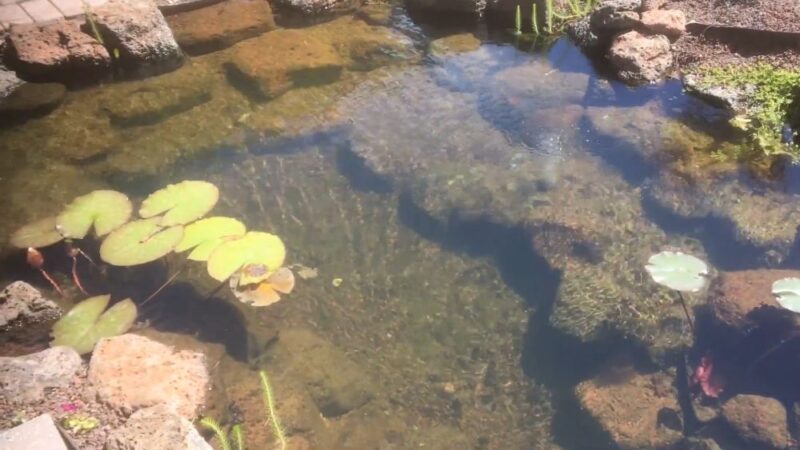
Stagnant areas allow organic material to settle and decompose, increasing nutrient release. Improving circulation reduces these pockets and supports oxygen stability.
Adjusting return jets, increasing pump runtime during bloom periods, and enhancing bottom-level movement can significantly improve distribution.
In ponds with persistent accumulation in corners, shallow shelves, or behind structural features, jetstream equipment may be used to direct stronger currents into those areas.
Redirecting settled waste into the main flow allows filtration systems to capture suspended particles more efficiently and reduces localized nutrient concentration.
Use Chemical Treatments Carefully
Algaecides can reduce algae quickly, yet the rapid die-off of dense blooms may lower dissolved oxygen levels. Aeration should remain active during treatment to prevent stress on fish.
Long-Term Prevention And Water Balance
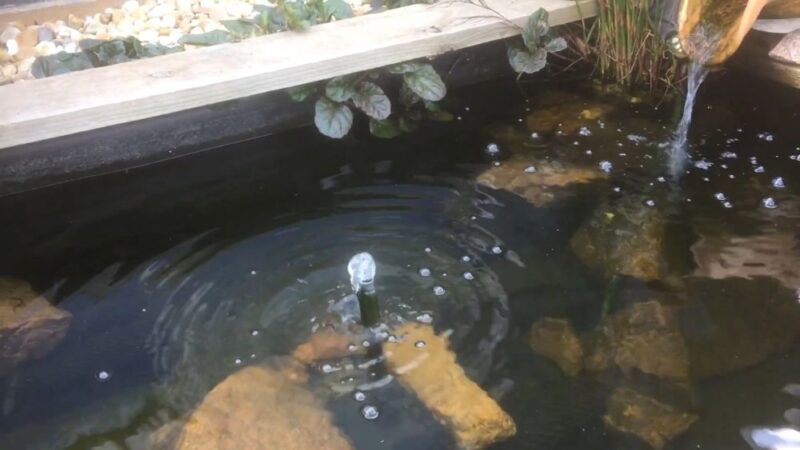
Preventive management focuses on keeping those factors aligned throughout the year.
Control External Nutrient Sources
Nutrient reduction remains the most important preventive measure. Runoff carrying soil, fertilizers, or organic waste increases phosphorus and nitrogen levels.
Preventive steps include maintaining vegetation around the pond edge, redirecting surface runoff, and removing organic debris before it decomposes.
Fish stocking density and feeding practices should match filtration capacity. Excess feed and waste increase dissolved nutrients.
Maintain Filtration And Flow Stability
Filtration systems should operate consistently and be sized for total pond volume and biological load.
Mechanical and biological components require routine inspection and cleaning without disrupting established bacterial colonies.
Water circulation must prevent stagnant zones where organic material accumulates. Even distribution of flow supports oxygen stability and efficient waste processing.
Support Biological Balance
Aquatic plants reduce nutrient availability by absorbing dissolved compounds. Balanced plant coverage limits light penetration and strengthens competition against algae.
Beneficial bacteria in biofilters convert ammonia into less harmful forms. Stable bacterial populations improve overall water chemistry and reduce nutrient spikes.
Monitor Seasonal Conditions
Temperature increases accelerate biological activity and nutrient cycling. Pre-season maintenance, sludge removal, and equipment checks reduce the risk of early blooms.
During warm periods, adequate aeration protects oxygen levels and supports microbial stability.
Bottom Line
Green pond water usually means the pond is carrying more nutrients than it can process. Sunlight and heat accelerate algae growth, but nutrients drive it. When waste accumulates and circulation remains uneven, algae expand faster than filtration and bacteria can control.
Clearing the water starts with reducing what feeds the bloom. Remove decomposing debris, manage feeding, and limit runoff entering the pond. Ensure filtration matches pond volume and stocking level. UV systems help with suspended algae, and steady water movement prevents waste from settling in low-flow areas.
Stable results come from consistent maintenance. Balanced nutrient levels, reliable equipment performance, and proper circulation keep algae under control.